What Customers Actually Want to See in an Inspection Video
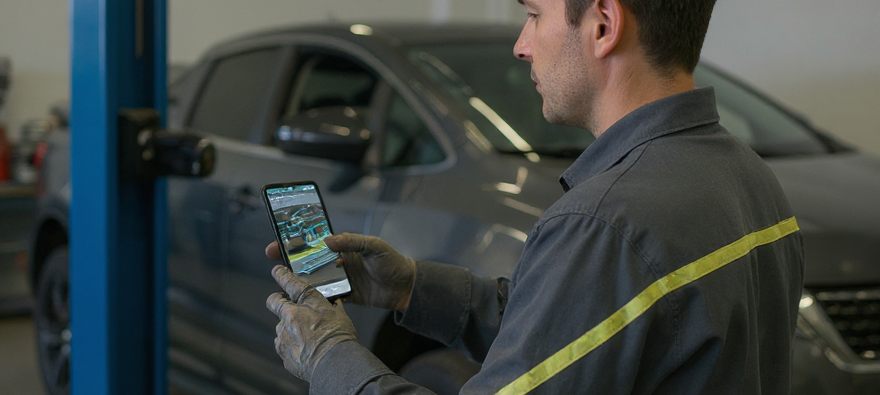
You send inspection videos every day. Your techs record them, your advisors text them, and your customers… ignore them. Or watch five seconds and tap away. Or watch the whole thing and still decline the work.
That last one stings the most. Because the problem was real, the repair was necessary, and the video was supposed to close the gap between “we recommend this” and “go ahead and do it.”
So what went wrong?
The Approval Problem Is Not a Sales Problem
Across the industry, 30-40% of recommended work gets declined by customers. That is a massive revenue leak. On a busy day with 40 ROs, that could be 15 or more jobs where the customer said no to work their vehicle actually needed.
Most shops assume this is a pricing issue or a trust issue. Sometimes it is. But more often, the customer simply did not understand what they were looking at. They watched a shaky video of something dark and greasy, heard some background noise, and had no idea what it meant for their car or their wallet.
The video did not sell the work because the video did not communicate anything useful.
What Bad Inspection Videos Have in Common
If you have ever reviewed your team’s inspection videos (and if you have not, you should), you will notice the same patterns over and over:
No verbal explanation. The tech points the camera at a worn brake pad and says nothing. Or mumbles something that gets swallowed by the impact wrench two bays over. The customer sees a close-up of a part they cannot identify and has zero context for what they are looking at.
Confusing angles. The camera moves too fast, starts too close, or never shows the bigger picture. A customer who does not know what a control arm bushing looks like needs a wide shot first. Then a close-up. Most videos skip the first step entirely.
No comparison. Showing a worn part means nothing if the customer does not know what a good one looks like. “This is what yours looks like. This is what it should look like.” That single comparison does more selling than five minutes of explanation.
Too long or too short. A 90-second video with 80 seconds of walking and fumbling loses people fast. A 5-second clip of a part with no audio leaves them confused. The sweet spot is 20-45 seconds per concern, with a clear beginning, middle, and end.
No recommended action. The video shows a problem but never tells the customer what to do about it. “We recommend replacing this before your road trip next month” gives the customer a reason to say yes right now.
What a Good Inspection Video Actually Includes
When a video consistently gets approvals, it usually follows a simple structure. This is not complicated, but it does require intention.
1. A clear shot of the problem. Steady camera, good lighting (use your phone’s flashlight), and enough distance that the customer can tell what part of the vehicle they are looking at. Start wide, then move in close.
2. A confident verbal explanation. The tech says what the problem is, in plain language. Not “excessive play in the lower ball joint.” Instead: “This ball joint has too much movement. It connects your wheel to the suspension, and when it wears out like this, it affects your steering and your tire wear.” Talk to the customer like they are standing next to you.
3. A comparison to what “good” looks like. If possible, show the other side. “See how this one is tight and does not move? That is what yours should look like. Now look at this side.” If a side-by-side is not available, describe it. “A new one would have zero play here.”
4. Why it matters to them. Connect the repair to something the customer cares about: safety, cost of waiting, avoiding a breakdown. “If this fails while you are driving, you lose steering control” is a lot more convincing than “it is worn and needs to be replaced.”
5. A clear recommendation. End with what you suggest. “We recommend replacing this now. It is a two-hour job and will prevent bigger problems down the road.” Give the advisor something concrete to work with when they follow up.
That is the formula. Problem, explanation, comparison, consequence, recommendation. Five pieces, 30 seconds, and suddenly the customer understands exactly what they are approving.
Why Most Techs Do Not Record Videos This Way
It is not because they do not care. It is because nobody taught them how. Techs are trained to diagnose and repair vehicles. They are not trained to communicate findings to a non-technical audience on camera while lying under a lift.
Some techs are natural communicators. They make great videos without thinking about it. But most need guidance, and expecting every tech on your team to figure out on-camera communication on their own is not realistic. Beta testers told us the same thing: the biggest gap was not the diagnosis itself but translating it into something the customer could act on.
This is where the process usually breaks down. You train the team on video best practices, it works for a week, and then everyone drifts back to pointing a camera at a part and hitting send.
How AI-Guided Video Inspections Change the Math
RO.bot’s AI-guided video inspection tool puts an on-screen teleprompter directly in the tech’s recording view. Instead of guessing what to say or trying to remember a five-step framework while lying on a creeper, the tech sees prompts in real time: show the problem, explain what it is, compare to good condition, explain the consequence, state your recommendation.
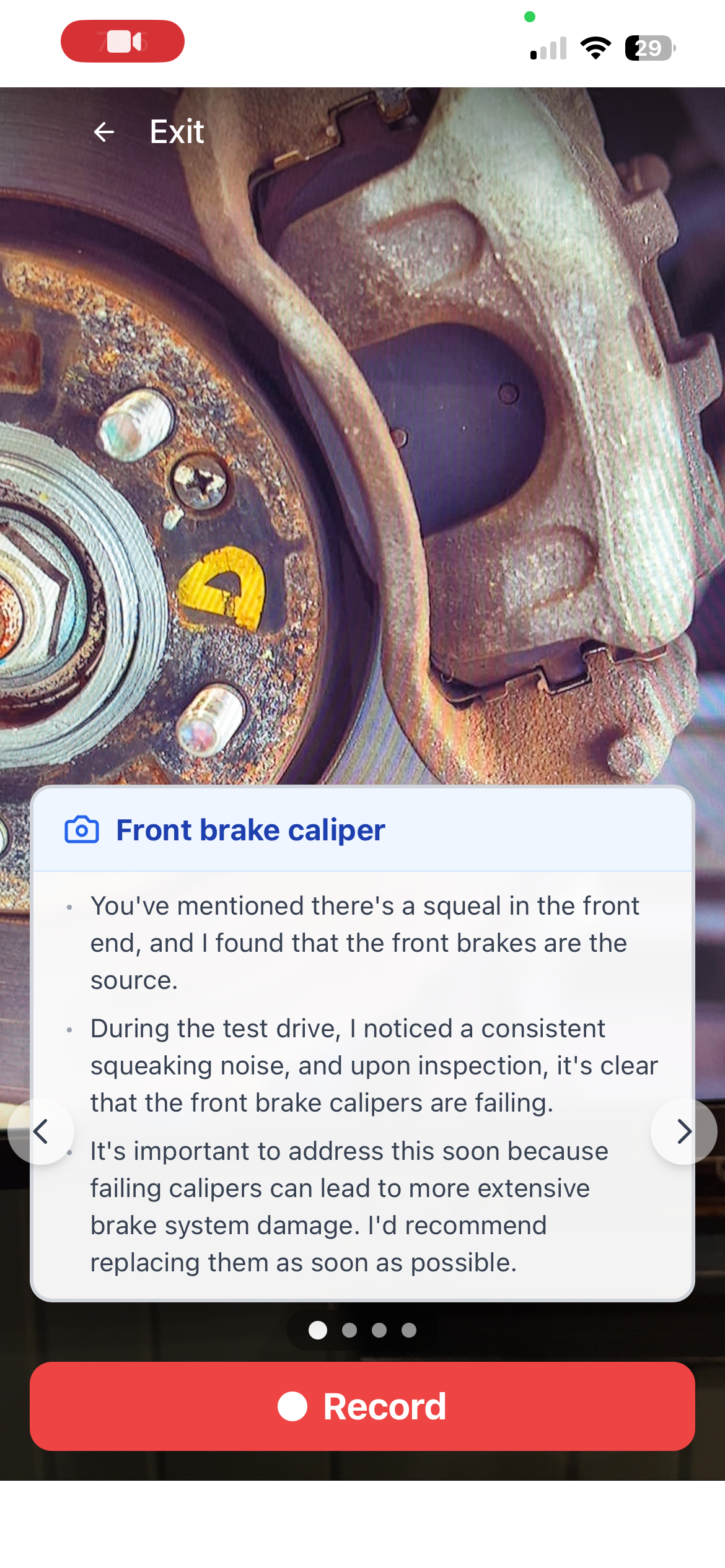
The teleprompter adapts to the specific concern the tech is recording. A brake video gets different prompts than a suspension video. The tech does not have to think about structure. They just follow the prompts and talk about what they know: the vehicle in front of them.
The result is a video that covers every element customers need to make a decision. Every time. Not just when your best communicator happens to be on that RO.
This is the “Sell More Work” piece of the RO.bot value framework. Finding work matters. Getting paid for work matters. But if the customer declines the work because the video did not communicate the problem clearly, none of that matters. Better videos are the bridge between discovered work and approved work.
The Bottom Line for Service Managers
You do not need your techs to become filmmakers. You need a consistent process that helps every tech on your team produce a clear, persuasive 30-second video. When customers understand what they are looking at, they approve more work. When they approve more work, your revenue per RO goes up without adding a single bay or a single technician.
Look at your declined-work numbers this month. Ask yourself how many of those were a communication problem, not a pricing problem. The answer will tell you exactly how much better videos are worth to your shop. And for the declined work that was not a video problem, the money is still on the table, most of it is recoverable with documented, well-timed follow-up.
Ready to see how AI-guided video inspections work in your shop? Book a demo and we will walk you through it with your team’s real workflow.