How to Increase Your Warranty Labor Rate to Retail
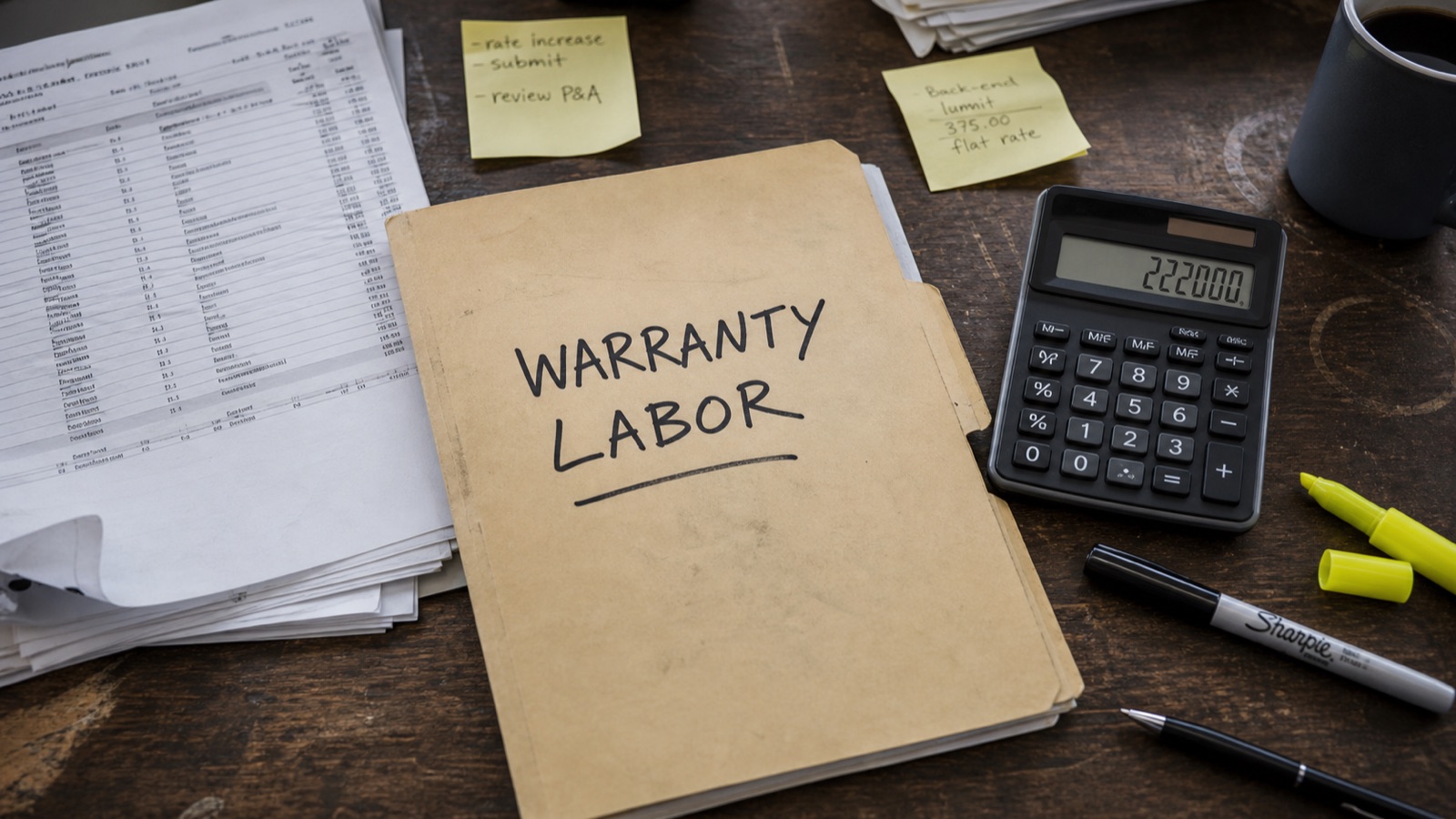
Your factory reimburses warranty labor at one rate. You charge cash customers a higher one. For years that gap was just the cost of doing warranty work. It is not anymore. Most states now require manufacturers to reimburse warranty labor at or near your retail customer-pay rate, though the filing rules vary by state. The catch is that the law does not raise your rate for you. You have to file for it, and the filing lives or dies on documentation you are already supposed to be creating.
TL;DR
A warranty labor rate is the hourly rate a manufacturer pays a dealer for warranty repairs. In many states, dealers can increase that rate to match their retail customer-pay labor rate by filing a retail warranty reimbursement submission built from qualifying customer-pay repair orders.
What is the warranty labor rate, and why is it lower than retail?
Your warranty labor rate is what the manufacturer pays you per flagged hour on warranty repairs. Your retail or door rate is what a cash customer pays for that same hour. For decades the warranty number was a negotiated discount, and on most franchise agreements it landed well under retail. Warranty is no small slice of the work either. Industry reporting puts it at roughly a quarter of service volume and more than 15 percent of total dealership gross, so a rate that trails retail leaks real money. One worked example in WardsAuto pegged a single store running about 500 warranty hours a month at roughly $222,000 a year in lost gross from the shortfall.
The legal picture has shifted hard in the dealer’s favor. Most states now have statutes requiring manufacturers to reimburse warranty labor at or near the retail rate you charge non-warranty customers, though the exact standard and filing rules vary by state, according to warranty-recovery firm Armatus Dealer Uplift. The principle is consistent: warranty work should pay close to what the same work pays on a customer-pay job.
How do you raise your warranty labor rate to retail?
Here is the part that trips shops up. The law does not raise your rate on its own, and the manufacturer will not volunteer it. You have to file a submission. This filing is called a retail warranty reimbursement submission, and it works off your customer-pay repair orders, not your warranty ROs.
You pull a sample of consecutive non-warranty ROs and the manufacturer calculates your effective retail rate from it. The common standard is around 100 sequential customer-pay ROs, or 90 days of work, whichever is fewer, drawn from a recent window such as the last 180 days, per guidance summarized by NHADA and Armatus. The math is the same effective-rate formula your DMS runs: total qualifying customer labor charges divided by the labor hours that generated them, as written into statutes like Minnesota’s.
Not every ticket counts. Routine maintenance, tires, batteries, and discounted or promotional work are typically excluded from the sample, because none of those reflect your true retail labor rate. The exact exclusion list, the sample size, and the timing all vary by state and by OEM, so this is one to confirm against your own state statute before you file. Most dealers can file for a warranty labor rate increase only once a year, which means a weak filing costs you for the next twelve months.
The Retail Rate Submission, in Three Steps
What gets a warranty rate submission rejected?
A manufacturer can dispute your declared rate as materially incomplete, materially inaccurate, or materially unreasonable, and then audit the sample. Thin repair orders are what give them the opening. The defects that get lines pulled or the rate chipped down are the same ones that get individual claims denied: missing technician time punches, missing customer or manager signatures, and vague 3Cs that do not show a clear complaint, cause, and correction on each line. As one warranty-audit resource puts it, incomplete repair documentation is one of the largest causes of warranty non-compliance. Your sample only proves a rate as high as your documentation supports.
The rate you can claim is the rate you actually document
This is the part most shops miss. The number you get to submit comes straight out of your customer-pay labor charges divided by your customer-pay hours. Two stores with the identical sign out front can submit very different effective rates, depending on how many billable hours actually land on each RO and how much labor gets discounted away at the counter.
That makes this the same fight as your effective labor rate. Every finding a tech never logs and every labor discount written off the ticket lowers the sample, so you end up submitting a number below what your shop really earns. Capturing every billable hour does double duty here. It lifts the rate you live on day to day, and it supports the warranty rate you are asking the manufacturer to reimburse. The fastest place to find those hours is the inspection, which is exactly the leak in your MPI completion rate.
Where RO.bot fits
RO.bot does not file your submission and it does not set your rate. It helps the submission by improving the repair orders underneath it. More of the billable work a tech finds gets captured during the inspection, so the customer-pay lines in your sample reflect what the shop really does instead of what made it onto the clipboard. The complaint, cause, and correction on each line stay complete and consistent, which gives an auditor less room to call the sample materially incomplete. And weak stories get flagged before they ship, so the warranty work you write after the increase keeps passing review. That last part matters, because a wave of denied warranty claims or a failed warranty audit claws back the exact gross you just fought to raise.
The higher rate is already available to you in most states. The manufacturer is not going to hand it over, and a stack of thin repair orders will not get it for you either. File the submission, build it on clean customer-pay documentation, and keep your warranty stories strong enough to hold the rate once you have it.